
Disclosure: As an Amazon Associate, Treadluma earns from qualifying purchases. Our guides are based on manufacturer-published specifications, not hands-on testing.
Full-size treadmills and under-desk walking pads both put a moving belt in your home, but they are built for completely different jobs. One is exercise equipment. The other is furniture that happens to move. Buying the wrong one is the most common regret in home fitness — here is how to choose correctly, with real dimensions and specs.
The Core Difference: Speed and Intent
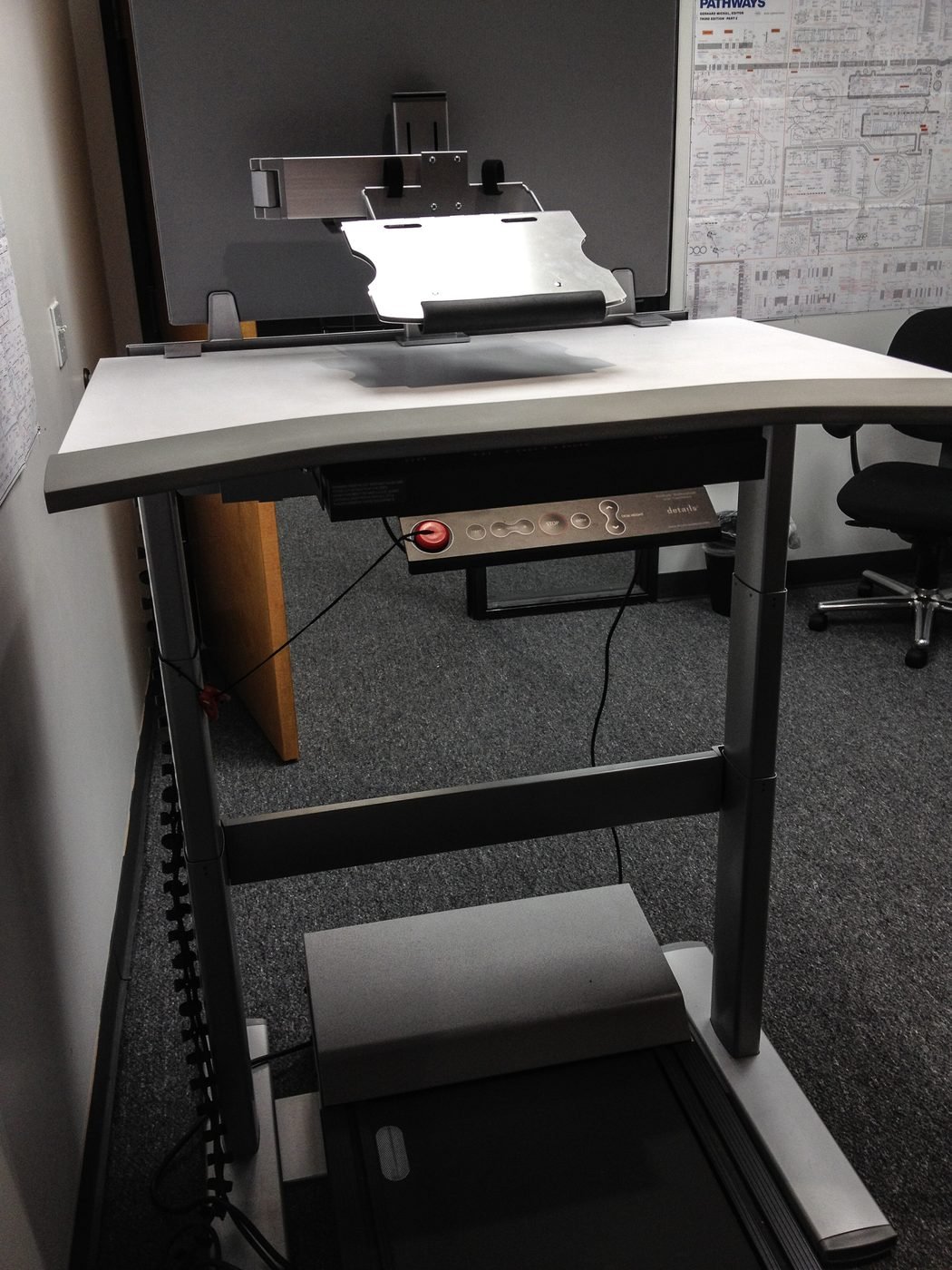
A walking pad is designed for one speed range: walking. The WalkingPad P1 publishes a top speed of 3.75 mph — a brisk walk, and deliberately so. It has no handrails, no incline, and no console. You control it with a remote while you work at a standing desk.
A full-size treadmill is designed for the full range: walking, jogging, and running. The Horizon T101 goes from 0.5 to 10 mph with powered incline to 10%. The Sole F63 reaches 12 mph with 15% incline. Handrails, a console, and a safety key are standard.
This is the entire decision in one sentence: if you will ever want to run, you need a treadmill. If you will only ever walk while working, a walking pad is enough.
Size and Storage: Where Walking Pads Win Big
| Model (published specs) | Footprint (in use) | Folded / Stored | Weight |
|---|---|---|---|
| WalkingPad P1 | 56.5″ × 21.5″ | 32.5″ × 21.5″ × 5″ (slides under bed) | 62 lb |
| Horizon T101 | 71″ × 33″ | 46″ × 34″ × 61″ (folds upright) | 180 lb |
| Sole F63 | 82″ × 35″ | Folds upright (deck vertical) | ~254 lb |
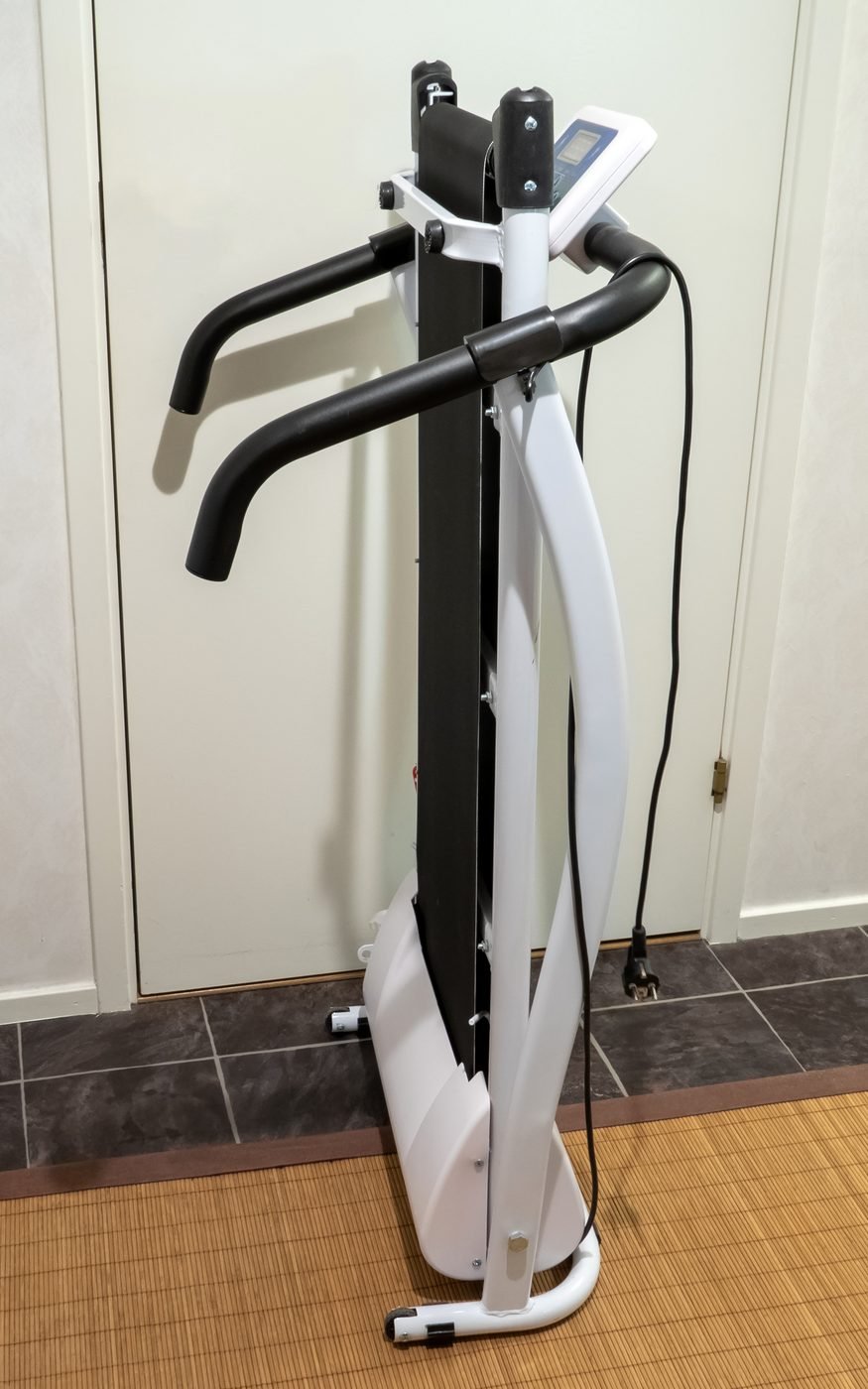
The WalkingPad P1 folds in half to just 5 inches thick — it slides under a bed or sofa. A folding treadmill still stands 5 feet tall when folded and weighs three to four times as much. Our Fit Finder checks whether a full-size treadmill actually fits your room; walking pads fit almost anywhere by comparison.
But note the trade-off: the P1’s walking surface is 47″ × 16.5″, versus 55–60″ × 20″ on a real treadmill. At walking speeds that is fine. It is not a surface you would ever run on.
Motor and Durability
Walking pads use small motors — the P1’s manufacturer lists a 1 HP brush motor with 746 W power input. That is adequate for walking a few hours a day, but brush motors wear faster than the brushless continuous-duty motors in full-size treadmills, and the 220 lb user capacity reflects the lighter construction.
Full-size treadmill motors start at 2.5 CHP (Horizon T101) and climb to 3.0+ CHP (Sole F63) for runners. They are built for sustained daily use at higher speeds and heavier loads, with user capacities of 300–325 lb.
Neither category is “better” — they are rated for different workloads. Problems start when people buy a walking pad expecting it to survive daily running, or buy a treadmill just to walk at 2 mph while answering email.
What About Noise?
Both categories market themselves as quiet, and at walking speeds both are reasonably unobtrusive. The difference appears at higher speeds: a walking pad never gets there, while a treadmill’s motor and belt noise rise with speed. If you share walls and plan to run early in the morning, no treadmill is truly silent — but a walking pad at 2 mph is about as quiet as home cardio gets.
Price Reality Check
Walking pads typically cost $400–$600. Entry-level folding treadmills start around $650–$700 (the Horizon T101’s long-running street price) and climb past $1,000 for runner-grade models like the Sole F63.
The price gap is smaller than it looks. For roughly $200 more than a walking pad, a folding treadmill gives you running capability, incline, handrails, and a heavier-duty motor. The walking pad’s real advantage is not price — it is the 5-inch storage profile.
Who Should Buy Which
Buy a walking pad if: your only goal is more daily steps while working; you have a standing desk; storage space is extremely tight (studio apartment, shared room); you will never run on it. The WalkingPad P1’s published specs — 3.75 mph max, 220 lb capacity, folds to 5″ thick — define this category honestly.
Buy a treadmill if: you want to jog or run at all; you want incline training; multiple people of different sizes will use it; you want a machine built for years of daily use. Start with our treadmill buying guide to decode the specs that matter.
Buy neither yet if: you are unsure you will use it. Both categories gather dust at similar rates. A month of consistent outdoor walking is a cheaper experiment than either machine.
The Bottom Line
A walking pad is a step-counting appliance. A treadmill is exercise equipment. Match the machine to the job: walking while working versus actual training. And whichever you choose, basic maintenance — belt cleaning, lubrication, and alignment checks — applies to both.
All specifications above are manufacturer-published figures. Models and specs change; check the manufacturer’s current product page before buying.
2 thoughts on “Treadmill vs Walking Pad: Which One Fits Your Space and Your Goals?”
Comments are closed.