
As an Amazon Associate, Treadluma earns from qualifying purchases.
All rowing machines look similar from across the room: a seat that slides, a handle you pull, and footplates that hold you in place. The difference that matters most is hidden inside the machine. Air, magnetic, and water rowers create resistance in completely different ways, and that difference changes how each stroke feels, how loud the machine is, and how much upkeep it needs.
This guide explains each resistance type in plain terms, compares them side by side, and helps you match one to your home, your noise tolerance, and the kind of training you actually plan to do. If you are still deciding whether a rower belongs in your home gym at all, start with our treadmill buying guide and our treadmill vs walking pad comparison to see how rowing stacks up against walking cardio for a small space.
How rowing resistance works
A rower has to push back against your pull, or the handle would offer nothing to work against. Air rowers push back with a spinning fan. Magnetic rowers push back with magnets acting on a metal flywheel. Water rowers push back with paddles turning in a tank of water. In each case, a harder pull meets more resistance, but the relationship between effort and resistance is not identical across the three types, and that is where the feel diverges.
Two other factors shape the experience just as much as resistance. The first is the monitor, which reports pace, distance, stroke rate, and calories on most models. The second is the rail and seat, which decide whether the stroke feels smooth or choppy over a 20 minute session. Keep both in mind as you read, because a great resistance system on a short, rough rail will still disappoint.
Air rowers: the gym standard
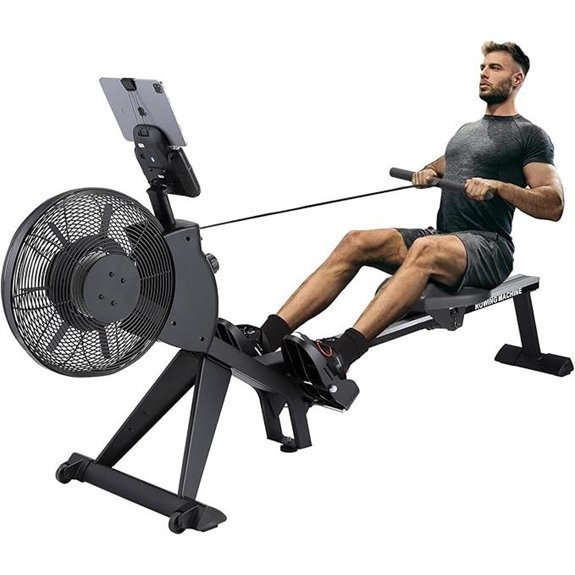
An air rower uses a fan flywheel. The harder you pull, the faster the fan spins, and the more air resistance you meet. That gives air rowers a natural, self adjusting feel: an easy warm up stroke feels light, and an all out sprint feels heavy, with no dial to turn in between. Many gyms use air rowers for this reason, and people who train for rowing competitions usually practice on them because the stroke response closely tracks real effort.
The trade off is noise. A fan moving fast makes a rushing sound that rises with effort, similar to a strong fan on its highest setting. In a garage or a spare room with the door closed, that rarely matters. In a shared apartment with thin walls, it can matter a lot, especially for early morning sessions. Air rowers also tend to be longer than other types, so measure your floor space and check the folded or upright storage dimensions before ordering.
Maintenance is simple. The fan housing can collect dust over time, and the chain or belt drive needs an occasional wipe and, on chain models, a light oiling per the manual. There is no water to treat and no magnetic brake to calibrate. If you want the closest thing to a gym rower at home and noise is not a constraint, an air rowing machine is the usual starting point.
Magnetic rowers: quiet and controlled
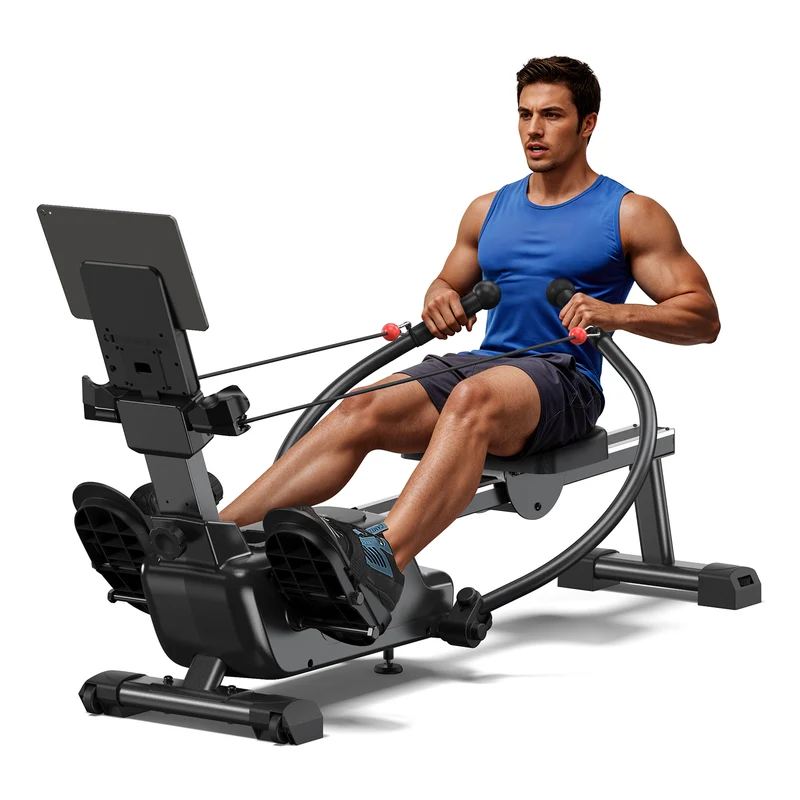
A magnetic rower creates resistance with magnets positioned near a spinning metal flywheel. Moving the magnets closer increases resistance, and moving them away decreases it. Most models offer a set of numbered levels, often adjusted with buttons or a dial on the console. That gives you precise, repeatable settings: level 6 today feels like level 6 next week, which makes it easy to track progress or follow a structured workout plan.
The main advantage is quiet operation. With no fan and no water sloshing, a magnetic rower is the quietest of the three types, and it is often the best choice for apartments, shared houses, or anyone who rows while others sleep nearby. The stroke feel is smoother and more even than an air rower, though some rowers find it less natural at very high effort, because resistance stays fixed at the chosen level rather than rising with pull speed.
Magnetic rowers also tend to fold or stand upright for storage, and many cost less than comparable air or water models. The main things to check are the rail length for your height, the weight capacity, and whether the monitor shows the metrics you care about, such as pace per 500 meters and stroke rate. A magnetic rowing machine suits steady cardio sessions, interval plans built around set levels, and any home where noise is the deciding factor.
Water rowers: the closest feel to rowing on water
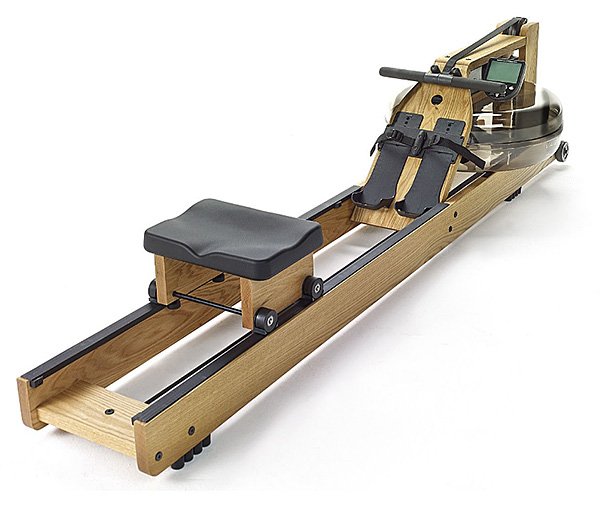
A water rower uses paddles inside a sealed tank. Pulling the handle turns the paddles, and the water pushes back. Adding water to the tank increases resistance, and removing water decreases it, so the adjustment is coarser than the numbered levels on a magnetic rower. Most owners set the water level once and leave it, then vary intensity by rowing harder or easier.
The appeal is the feel and sound. Each stroke produces a soft, rhythmic swoosh that many rowers find relaxing, and the resistance rises naturally with effort, much like an air rower. Water rowers also look different from other home gym equipment: many use wood frames that blend into a living space better than a steel gym machine. The downsides are weight, because a full tank adds considerable heft, and upkeep, because the tank water needs occasional treatment tablets and a periodic change per the manual to stay clear.
Water rowers are also harder to move once filled, so plan the final spot before filling the tank. If you value a natural stroke, enjoy the sound of water, and have a dedicated spot with room for a longer machine, a water rowing machine is worth serious consideration.
Air vs magnetic vs water at a glance
| Feature | Air | Magnetic | Water |
|---|---|---|---|
| How resistance works | Fan flywheel, resistance rises with pull speed | Magnets near a flywheel, set levels | Paddles in a water tank, level set by water amount |
| Stroke feel | Natural, effort driven | Smooth, even, level based | Natural, effort driven, with a water swoosh |
| Noise | Loudest, fan rush rises with effort | Quietest | Moderate, soft water sound |
| Maintenance | Dust the fan, wipe and oil the drive | Minimal, wipe down and check bolts | Treat and change tank water, wipe the tank |
| Storage | Often splits or stands upright, check the model | Often folds or stands upright | Stands upright on many models, heavy when full |
| Best for | Hard training, gym style workouts | Quiet homes, level based plans | Natural feel, a machine that looks good in a room |
For a direct price check on each type, use these links: Check price on Amazon for air rowers, Check price on Amazon for magnetic rowers, and Check price on Amazon for water rowers.
Which type fits your home
Start with noise, not price. If you row before others wake up, or if you share walls with neighbors, a magnetic rower removes the biggest friction point in the whole purchase. If you have a garage, basement, or spare room, noise drops out of the decision and feel takes over.
Next, think about how you like to train. People who chase harder efforts and want the machine to reward a stronger pull tend to prefer air or water. People who follow set workouts, track levels week to week, or want a quiet, predictable session tend to prefer magnetic. Neither preference is wrong, but buying against your own preference is the most common reason a rower ends up unused.
Finally, measure. Check the assembled length, the width at the footplates, and the ceiling clearance if you plan to store the machine upright. A rower needs roughly the length of the machine plus room to sit and pull, and a short rail will cramp a taller rower no matter how good the resistance system is. Leave clear floor around the rail for safe mounting and dismounting, and place the machine where you can reach it without moving other equipment first, as our treadmill maintenance guide advises for cardio machines in general.
Monitors and metrics worth checking
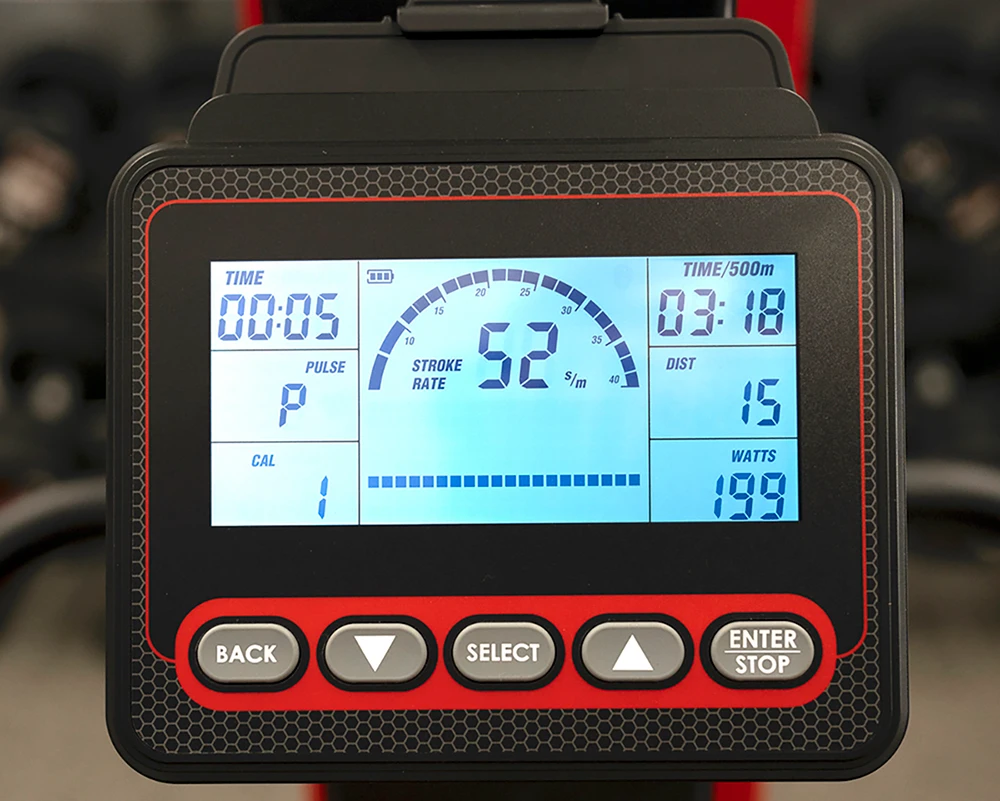
Most rowers report time, distance, stroke rate, and an estimate of calories. The metric that matters most for comparing workouts is pace per 500 meters, which tells you how fast you would cover that distance at your current effort. If the monitor lacks that figure, comparing sessions or following online rowing workouts becomes guesswork.
Also check whether the monitor connects to a heart rate strap or a training app, if that matters to you. Basic monitors cover the essentials, and fancier consoles add programs and app integration. Do not pay for a large screen you will ignore, but do not accept a monitor that hides pace, either.
Space, flooring, and upkeep
Rowers are long but narrow, which makes them easier to place than many people expect. A rubber mat under the machine protects flooring, keeps the rower from sliding on hard floors, and dampens vibration. Keep the rail clear of clutter, wipe the rail and seat rollers after sweaty sessions, and check the foot straps and handle grip for wear every few months.
For a small home gym, a rower pairs well with a compact strength setup. See our adjustable dumbbells guide and our kettlebell first set guide for strength options that share the same floor space without a second large machine.
Common mistakes to avoid
The first mistake is buying on resistance type alone and ignoring rail length. A rower who is six feet tall on a short rail will hit the end of the slide on every stroke. The second mistake is skipping the noise question and discovering the fan sound at 6 a.m. The third mistake is assuming a water rower is maintenance free: the tank needs attention, and ignoring it leads to cloudy water and a worse looking machine.
Another common error is rowing with poor form from day one. Keep your back straight, drive with your legs first, then swing your torso, then pull with your arms, and reverse the order on the return. Short, controlled sessions with good form build more fitness than long sessions with a rounded back, and they keep your lower back happy.
The bottom line
Choose an air rower if you want gym style, effort driven training and noise is not an issue. Choose a magnetic rower if quiet operation and repeatable levels matter most. Choose a water rower if you want a natural stroke, a pleasant sound, and a machine you will not mind looking at between sessions. Whichever type you pick, confirm the rail length, the weight capacity, and the monitor metrics before ordering, and give the machine a dedicated spot where using it is easy. A rower that is simple to reach gets used, and a rower that is hard to reach does not, whatever resistance system it uses.